International Rose Trial Winners Announced

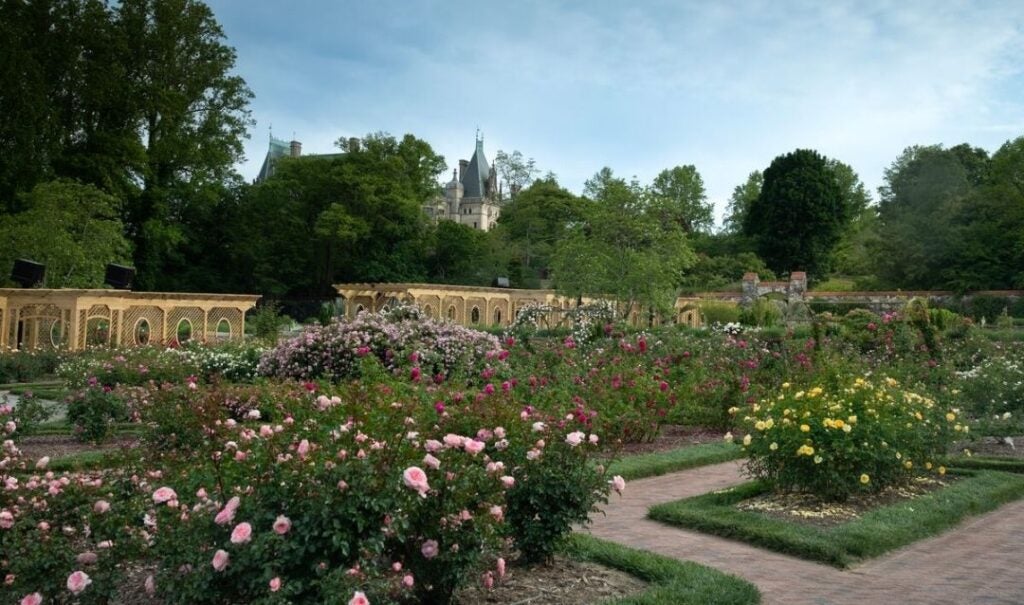
Our first International Rose Trials came to a close on Saturday and our jury selected winning roses in 12 categories.  Since 2011, Biltmore’s historic Rose Garden has been home to the Biltmore International Rose Trials. During this time, more than 75 varieties from growers and breeders worldwide have been planted and cared for by Biltmore’s horticulture team. Each trial lasts two years and a permanent jury judges the roses four times per year. During Saturday’s judging, the jury conducted the final round of judging for the first trial group of 25 roses.

This is the first international trials on the East Coast, and only one of two held in the U.S. Rose trials in Europe are a more common occurrence, with trials held in 20 different locations in 15 countries. ”The trials are a valuable way for the home gardener to learn what roses do well and what may be potential candidates for their own gardens,” said Paul Zimmerman, coordinator of the trials. “Trials of this type are usually open to all rose breeders around the world – from professional to beginner.”

Our own rosarian, Lucas Jack, had an integral part on the rose trials.  “Biltmore’s historic Rose Garden is the perfect setting for trials,” said Jack. “We’ve enjoyed introducing these new varieties to our guests as they stroll through the gardens. It has been an educational experience, and it complements the work we do to care for Biltmore’s collection of heirloom roses.”

New rose varieties will be planted for trials each May. They are evaluated for garden performance, fragrance, disease resistance and ability to be used in varying landscape situations. The next awards will be in 2014 for the trials planted in 2012 and will continue annually.  


The First Biltmore International Rose Trials Winners


George & Edith Vanderbilt Award for Most Outstanding Rose Of The Trials (Best in Show)
‘ATHYfalaa’ bred by Mike Athy of Mike Athy Roses, New Zealand

Award of Excellence For Best Established Rose
‘Belinda’s Dream’ bred by Dr. Robert E. Basye, United States (Wisconsin)

Award of excellence for International Jury Favorite
‘ATHYfalaa’ bred by Mike Athy of Mike Athy Roses, New Zealand

Frederick Law Olmsted Award for Best Groundcover
‘Roxy’ bred by Kordes Rosen, Germany

Edith Wharton Award for Best Floribunda
‘Milwaukee Calatrava’ bred by William Radler of Conard-Pyle/Star Roses, United States

The Honorable John Cecil Award for Open Group
‘Sunshine Daydream’ Grandiflora rose bred by Michèle Meilland Richardier, France

Gilded Age Award for Best Climber
‘ATHYfalaa’ bred by Mike Athy of Mike Athy Roses, New Zealand

Pauline Merrell Award for Best Hybrid Tea
‘Beverly’ bred by Kordes Rosen, Germany

Chauncey Beadle Award for Best Shrub
‘Darcey Bussell’ bred by David Austin of David Austin Roses, United Kingdom

Cornelia Vanderbilt Cecil Award for Most Fragrant Rose
‘Beverly’ bred by Kordes Rosen, Germany

William Cecil Award for Best Growth Habit
‘ATHYfalaa’ bred by Mike Athy of Mike Athy Roses, New Zealand

Lord Burleigh Award for Most Disease Resistant
‘ATHYfalaa’ bred by Mike Athy of Mike Athy Roses, New Zealand

Make Mother’s Day Morning Special

Our experts at the Inn have come up with some easy ideas for creating a simple yet elegant breakfast to honor Mom first thing in the morning on her day this Sunday – Mother’s Day. She’ll be delighted that you took the time to make a meal for her – and even more thrilled that she can stay in bed and wait for you to deliver it to her.

Keep the Meal Simple
You don’t have to be a professional cook to make Mom feel like royalty. So don’t shy away from making it easy for yourself as well. Think of it in three parts:  Main Dish, Side Dish and Drink.


Main Dish
For the main dish, think eggs. They’re versatile and can be as dressed up or as low-maintenance as you wish. Scramble them with seasonings; poach them and serve with toast and jam; or create an omelet –just fill it with cheese, or go elaborate and add crab, asparagus and brie.

Side Dish
Pastries. There’s nothing wrong with dressing up bakery-bought pastries, especially if you warm them in the oven and arrange them on a pretty plate. Add a little butter pat on the side.  Ready-to-bake cinnamon rolls are also easy to manage, and they fill the house with aromas of cinnamon and sugar.  When Mom wakes up to that scent, she can’t help but smile. 

Parfait or Fruit. Or both. Parfaits are easy to make and pretty. Layer a fancy bowl or glass with Mom’s favorite cereal or granola, and alternate with yogurt and fruit.  Plain yogurt mixed with honey is a nice touch, or any of the flavored varieties will work.

A plate of fresh fruit with honey yogurt dipping sauce is a light choice and ready in minutes. Arrange slices of fruit in different colors on a plate. Consider using banana, berries, cantaloupe, honeydew, watermelon, papaya and pineapple. For the dipping sauce, just mix honey into plain yogurt until it tastes sweet.  

Drink
Offer a glass of fresh orange juice (or her favorite), and a cup of coffee with cream and sugar.


The Presentation
For presentation, line a bed tray with a cloth napkin. Use the nicest dishware and glassware in the house. Don’t forget to add either the morning newspaper or her favorite magazine. The finishing touch is her favorite flower in a vase.

The Lovely Azaleas

Strolling through our 15-acre Azalea Garden in May is a rite of spring, with thousands of bright blossoms lining the stone stairs and masses of vivid flowers cascading throughout the area. In fact, we expect peak azalea color this week.

We have Chauncey Beadle to thank for all of that gorgeous color. Chauncey, a Canadian horticulturalist hired in 1890 by Frederick Law Olmsted for his encyclopedic knowledge of plants, served as estate superintendent from 1909 until his death in 1950.

“Beadle loved all plants, but he had a special fondness for native deciduous azaleas,” said Bill Alexander, Landscape & Forest Historian. “He and two close friends became known as ‘the azalea hunters’ collecting virtually every form and color variation.”

Beadle and his colleagues kept detailed notes about their forays, writing down when and where they collected plants on travels throughout the Southeast. Native azaleas were Beadle’s passion, and he called them the finest American shrubs.

In 1940, he gave his entire collection of azaleas (which he fondly referred to as “his children”) to Biltmore, planting them in the valley below the Conservatory known as the Glen. Edith Vanderbilt changed the garden’s name to the Azalea Garden to honor Beadle and his lifelong work on his 50th anniversary with Biltmore.

Today, gardeners Bob Smart and Charles Harris, members of the estate’s Historic Gardens landscaping crew, are responsible for maintaining Beadle’s legacy and the never-ending upkeep of the Azalea Garden.

“Chauncey Beadle planted several thousand azaleas originally,” said Bob. “We try to keep as many old plants as possible, replacing them when needed with old types and species, but we also bring in new ones to keep the garden thriving.”

Last year, they replanted several hundred azaleas—mostly evergreens—lining the stone stairs at the Azalea Garden’s entrance and added nearly 400 more in the rest of the garden. Charles explains that the eye-catching evergreen varieties have heavier, more prolific blooms and some even re-bloom. They also planted many native deciduous azaleas that display delicate orange, yellow and pink flowers in late spring.

Not all their time is spent planting; they devote hours researching and collecting additional azaleas to keep the garden beautiful. They find plants at trade shows, through the North Carolina Nursery Notes bi-monthly magazine, nurseries, and growers who visit here.

“Sometimes growers we know will visit the garden and suggest a particular addition,” said Charles. “They recognize that it’s an honor to have plants here.”

Learn more about our gardens and grounds.

A Perfect Arrangement

For Your Home, From Our Gardens

The Biltmore Floral Team created a pair of stunning floral arrangements to brighten up our For Your Home  booth at a recent wedding show. The talented team members crafted the arrangements to feature greenery from Biltmore’s historic gardens as well as gorgeous flowers.

The results were so beautiful that we asked Biltmore Floral Design Manager Cathy Barnhardt to share her expert “how-to” tips and suggestions for bringing the outdoors indoors with a similar arrangement for your own home.

Bring the outdoors in

“First of all,” Cathy said, “these arrangements showcase a great mix of ‘florist flowers’ as well as greens cut straight from our gardens.”

To highlight the feeling and the fragrance of spring, Cathy and her team chose blue delphinium, deliciously-scented white stock, some lovely cream ‘Virginia’ roses, and a handful of tulips. The greenery was all gathered from the gardens at Biltmore.

“If you have access to a garden or wooded area, this is a great way to bring the outdoors into your arrangements and your home, and it makes it even more personal that you provided the greenery yourself rather than choosing it from a flower shop.”

“To really highlight the outdoor feeling,” said Cathy, “we used long tendrils of ivy, snips of rosemary from the herb garden, a few fern fronds, and even some pieces of red twig dogwood. This mix of textures helps us create an arrangement that is both elegant and richly textured, much like the feel of a cottage garden.”

Ready to try it at home?

“The most helpful trick in this kind of arrangement is to remember how things grow naturally in the garden,” Cathy explained. “Place your flowers in groups or clusters rather than scattering them throughout the arrangement. That will give it style, but it will still feel organic and natural.”

Behind the scenes

“One of the most fun ‘perks’ my team enjoys,” Cathy told us, “is having cutting privileges in the historic gardens and natural areas around Biltmore. Any time of year, we can find something interesting to include in our arrangements that comes directly from the estate and reflects both the current season and elements of the original landscape design.”

George Vanderbilt: Book Lover

Please enjoy this archived content.

book from George Vanderbilt’s time that he readCurrently on display, now through May, in the exhibit case in the lobby of the Inn on Biltmore Estate is a collection of books from George Vanderbilt, his time, and a look at his reading habits.

George collected many fine things, including a personal library of 22,784 books that he selected with care, and treasured throughout his life. From the age of 12 until his untimely death at 51, George was an ardent reader and appreciator of literature. We know so much about his reading habits today because he kept meticulous records of all the books he read in a series of journals called “Books I Have Read.” In addition, he kept an index in a separate journal, with an alphabetical listing of titles by author and the dates that he read them.

We can’t answer who George’s favorite author was, but his journals give us a few clues. George seems to have enjoyed Charles Dickens’ work. Included in the 30 listed titles by Dickens are two mentions of “The Pickwick Papers,” which George read at age 13, and again when he was 25. We also know that he must have been a fan of Sir Walter Scott, given the 273 books by Scott in his collection. George read many of these books two or three times.  For example, he read “Waverly,” a groundbreaking historical novel, in 1875, 1897 and again in 1910.

One feature in George’s record-keeping that we find particularly touching is that, tucked in among the list of authors and titles, are mentions of precious life events. In 1900, for example, he noted the birth of his daughter, Cornelia, within a list of French and English novels he had been reading.

George was also very interested in France. There are 4,326 French titles in his book collection, and the “Books I Have Read” journals show that he read many of them. Honoré de Balzac must have been another favorite author, because he noted having read more than 80 Balzac titles, the majority of which were in French. There are a total of 218 books by Balzac in George’s collection.

When George was a young man of 14, he read James Fenimore Cooper’s novel “The Last of the Mohicans.” Interestingly, much of the 1992 film version of that novel was shot on location here at Biltmore.

The year before his death, George read “The Life of Samuel Johnson” by James Boswell. Samuel Johnson was an English poet, essayist and literary critic, and many scholars have claimed that Boswell’s work is the greatest biography ever written in English. George’s interest in quality literature was a lifelong pursuit, and we are very thankful to have such a detailed guide to his reading life.

About the photos

Top: Portrait of George Vanderbilt by painter John Singer Sargent, 1890.

Inset: George’s “Books I Have Read” journal opened to the 1,817th entry: “Richard Carvel” by Winston Churchill. Right above it is George’s note about daughter Cornelia’s birth on Aug. 22, 1900.

Bubbles and Truffles for Valentine's Day

The Black Swan. Romeo and Juliet. Giselle. Some of the greatest love stories told through dance include iconic pairings of dancers, or “pas de deux,” a French ballet term meaning “steps of two,” in which two dancers perform together. In the same romantic tradition, we think Biltmore’s lively Pas de Deux sparkling wine sets the stage as a perfect go-to wine for Valentine’s Day entertaining.

Almost as sweet as your Valentine, Pas de Deux sparkling wine is perfect as an aperitif cocktail before dinner, or with desserts such as fresh fruit, cheesecake, or chocolate truffles. This wine could also serve as the perfect start to a night out with friends.

What to expect from this wine….Crafted in the classic Methode Champenoise, the lively bubbles offer a celebratory note, while its delicate sweet flavors and crisp finish are the perfect foil for the rich, creamy texture of chocolate confections and decadent Valentine’s Day fare.

Try one of these cocktail recipes along with the following easy chocolate truffle recipe this Valentine’s Day.

Pomegranate Pas de Deux Punch

Orange Pomegranate CocktailServes One
Ingredients:
• 1 ¼ ounces orange vodka
• 3/4 ounce triple sec
• 1 ounce pomegranate juice
• 1/2 ounce fresh-squeezed orange juice
• 2 ounces Biltmore Pas de Deux

Method:
Combine vodka, triple sec, pomegranate juice, and orange juice in a mixing glass over ice. Shake well and strain over ice in a tall glass. Top with Pas de Deux. Garnish with an orange wheel.

Sparkling Blackberry Punch

Biltmore Sparkling Blackberry Punch_v1Serves One
Ingredients:

• 1 ounce light rum
• ¾ ounce blackberry brandy
• 2 ounces cranberry juice
• 1 ounce simple syrup
• 1 ounce blackberry puree
• 3 ounces Biltmore Pas de Deux

Method:
Combine rum, brandy, cranberry juice, simple syrup and blackberry puree over ice in a mixing glass. Shake well and strain mixture over ice in a tall glass. Fill with Pas de Deux. Garnish with fresh blackberries and a mint sprig.

Decadent Biltmore Chocolate Truffles

Makes about 20 truffles.

Ingredients:

• 8 ounces semi-sweet chocolate
• 1 cup heavy cream
• Cocoa powder or semi-sweet chocolate, as needed for the finish
• Optional additions: 2-3 tablespoons liqueur, roasted chopped nuts, chopped dried fruit, toasted coconut, fruit jam, peanut butter, sweet potato, caramel topping, chopped toffee or cookie pieces, extracts or flavorings.

Truffles and sparkling wineMethod:

To make the ganache, place chocolate into a bowl. Bring the cream to a boil and pour over the chocolate. Stir together until all is combined and chocolate is melted. Mix in any additions (see above for suggestions) to the ganache you desire. Let the ganache set and scoop into portions and place onto parchment or wax paper. Refrigerate for 10–15 minutes then take out and round into balls. Roll into cocoa powder or coat in semi-sweet chocolate and serve.

A sweetie for sweeties

Alicia Barger, the Inn’s pastry chef, had our mouths watering as she whipped up this guest favorite: Chocolate Cheesecake starring OREO® cookies! We talked her into sharing her recipe with us, which is a perfectly simple and absolutely delectable dessert for Valentine’s Day.

The recipe calls for a food processor to make the OREO crust. If you don’t have a food processor, Alicia has a trick:  Place the OREO cookies in a large sealable plastic bag. Press bag to remove excess air, then seal it. Use a rolling pin to crush cookies to form fine crumbs. Add the melted butter and squeeze the bag to evenly moisten the crumbs.

Inn on Biltmore Estate Chocolate Cheesecake

For Crust

3 tablespoons butter, melted

36 OREO cookies

Preheat oven to 350 degrees F.

Place cookies in food processor until finely ground.

Add butter and mix until moistened.

Press crumb mixture onto bottom of 9” x 13” pan sprayed with cooking spray.

Bake at 350 for 10 minutes. Cool before filling.


For Filling

1 1/8 cups sugar

¼ tsp salt

3 tablespoons butter, melted

1 pound, 14 ounces cream cheese, softened to room temperature (just under four 8-ounce packages from your grocer’s dairy case)

1 cup sour cream

1 cup chocolate syrup

4 large eggs

¾ cups whipping cream

Preheat oven to 300 degrees F.

Cream sugar, salt, and butter until light and fluffy.

Add cream cheese, scraping sides of bowl frequently.

Add sour cream and chocolate syrup. Scrape bowl well.

Add eggs and cream in increments, scraping well between additions.

Pour into cooled OREO crust-lined pan and bake for 1 hour. Test by lightly tapping on the top of the cake. It should be firm but slightly jiggly.

Winter birding at Biltmore

It may not be the first thing that comes to mind when you think about Biltmore, but opportunities to go bird watching are a wonderful way to enjoy all its natural beauty—even in the winter.

During his 34 years with Biltmore, Bill Alexander, Landscape and Forest Historian, has identified more than 200 species of birds on the estate.

“The largest river in Western North Carolina runs through the estate, and we have the Lagoon, Bass Pond and streams with aquatic plants, meadows, pastures, and parklands, thickets, pine forests, and hardwoods. All these habitats are ideal for different types of birds,” Bill said.

Combine these water features with the estate’s meadows, pastures, fields, and woods, and it’s easy to see why the estate is such a prime birding venue as well as an official site on the North Carolina Birding Trail.

According to Bill, winter is a good time to see waterfowl, especially ducks such as buffleheads, hooded mergansers, teal, ring-necked ducks and occasionally pintails and shovelers. Some winters, we may have flocks of blue and snow geese interspersed with the ubiquitous Canada geese. You may even see great blue herons or common snipe in and around wet spots, creeks and drainage ditches.

“We also see strays each fall and winter,” he said. “I’ve seen tundra swans and Sandhill cranes.”


Permanent residents

Bluebird on bird house

Some of our year-round birds include blue jays, cardinals, sparrows, crows, blackbirds, mourning doves, bobwhites, Carolina chickadees, tufted titmice, red-tailed hawks, ruffed grouse, and turkeys. Pileated woodpeckers and flickers are plentiful, and you can spot red-bellied and downy woodpeckers. Eastern meadowlarks can often be seen and heard in the fields near Antler Hill Farm even during the winter months. Watch for killdeer and bobolinks as well.

Throughout Western North Carolina, bluebirds and robins are common and many make their presence known at Biltmore in winter, too. Bluebirds—famed for their appetites for insects—are encouraged to stay and raise families with the estate’s Bluebird Nest Box Program. Employees volunteer to monitor more than 100 bluebird boxes, checking to see if boxes are occupied, recording the number of eggs and chicks, and cleaning out nests between broods. 


The eerie screeching and hooting of owlsBill Owl

Our most common owls, the great horned and screech owls are woodland birds that prefer mature forests and parklands like those that blanket Biltmore. Great places to find them include the woodlands near the Bass Pond, the trail around the Spring Garden, and forests around the Inn. Great horned owls begin breeding and nesting in January and February and their calls are most often heard this time of year. Sometimes you can locate a screech owl on a low branch in the forest just before dark by listening to its mysterious quavering call. Or, if you spend as much time as Bill does on the estate, you may get a closer look.

“I was walking in the woods just before dawn one winter, and something hit me on the top of my head,” Bill said. “All of a sudden my toboggan was flying through the air in the clutches of a great horned owl!”


Protecting birds for a century

Birds and Biltmore have been a thriving pairing for more than a century. George and Edith Vanderbilt were sustaining members of the N.C. Audubon Society, and estate employees were advocates for protecting birds. Landscape Architect Frederick Law Olmsted designed islands for the Lagoon and Bass Pond as safe places for nesting birds. Today, we intentionally leave some fallen trees, snags, and uncut meadows as habitat for birds and other wildlife.

According to Bill, anyone can become a birder with a decent pair of binoculars and a bird book. “Start by looking for birds by body size, flight pattern, and song,” he advised. “The best viewing times are typically early morning or late afternoon. It’s a great way to enjoy the outdoors in winter.”

About the photos

Photos of the tundra swan at the Lagoon and the immature great horned owl were taken by Bill Alexander on his many forays around Biltmore.

Happy Birthday, Dear Edith

Today, January 17, is the 140th anniversary of Edith Vanderbilt’s birthday. In celebration of her life and legacy, we thought it would be fun to share some little-known stories about her.

 Edith VanderbiltOne of my favorites is a very glamorous Edith dressed as a peacock for a party in the early 1920s, as seen in the main photo above. A lover of costume or ‘fancy dress’ parties her whole life, Edith entertained often at Biltmore and clearly had a flair for the dramatic. In preparation for a party planned for August 1922, she contacted the legendary Ziegfeld Follies in New York to inquire about renting a ‘White Peacock’ costume made famous by a showgirl known as Dolores. It appears that Edith had little luck in obtaining the outfit and resorted to having her own peacock costume made a year later. It’s not completely clear at what event Edith chose to strut her stuff, but we suspect the celebration was held in honor of her daughter Cornelia’s 23rd birthday.

Biltmore’s costume collection includes seed pearl jewelry and glass bead hair ornaments which were worn at other fancy dress parties during the 1920s, and a dazzling metallic mermaid costume that will go on display in the exhibition, “The Vanderbilts at Home and Abroad” this spring in Antler Hill Village.

Edith’s love of drama began at an early age. As a child, she and her sisters frequently played charades and imaginative games of “house.” Edith and her youngest sister, Pauline, also loved witnessing the theatrical transformation of Newport’s grand interiors that were typical for Gilded Age entertaining. In a memoir, Pauline recalled helping with preparations for lavish dinner parties and then taking delight in spying on the guests!

”…In August … we children would be kept busy wiring flowers for enormous centerpieces, for those were the days when tables were overloaded and great satin ribbons lay on the table cloths; extending from one solid bed of flowers to another. The blossoms of pink hollyhocks were fastened on toothpicks and pierced into moss-filled flat baskets joined by huge bow knots of pink satin ribbons which wound their way amid silver tankards and baskets of hothouse fruits. Edith and I used to climb out on the tin roof over the dining room and peer down through the sky-light at the guests, scuttling back to bed when the roof creaked and we feared detection. Of course the voices below drowned any noise we might have made, but we didn’t realize that…”

In her teens and early 20s, Edith lived in Paris and was a member of an amateur group that frequently hosted “theater parties.” If the peacock photograph is any indication, Edith’s penchant for drama was most pronounced during the Roaring Twenties, a time when many women felt a heightened sense of independence and freedom to express themselves creatively.

Edith hosted a number of masquerade balls at Biltmore House, as well as tableaux vivants, a popular form of entertainment in the late 19th and early 20th centuries. French for “living pictures,” tableaux vivants were elaborate productions in which costumed participants would pose in the guise of mythological or literary figures, famous paintings or individuals from history. These amusing spectacles were enhanced by live music, props and dramatic lighting.

No matter the occasion, it seems that Edith always took pleasure in finding ways to enhance the everyday. Her spirit lingers on, inspiring so much of what we do at Biltmore.

Thank you, Edith – and Happy Birthday!

Spa at Home Experience

Few things in life are as relaxing as a visit to a luxurious spa.

How can you get create the same feeling in your own home? We asked the experts at The Spa, located in the Inn on Biltmore Estate, for some do-it-yourself ideas that anyone can enjoy.

 Soak it up

A long soak in a hot tub can work miracles for tired muscles and a stressed mind. Treat yourself—or someone special—to a soothing experience with our Biltmore Bath & Body products. The clean, refreshing fragrances of this collection offer peace of mind and help relax your senses while moisturizing your skin. Try our Foaming Shower Gel for your home spa soak (or shower, if your time is limited). Follow up with Shea Butter Body Lotion and Hand Lotion to make the experience last even longer.

Indulge in the entire paraben-free Biltmore Bath & Body collection crafted with exceptional ingredients and featuring alluring scents such as Blood Orange, Black Orchid, The Gardens, Blackberries and Cream, and more.

Shop the complete Biltmore Bath & Body Collection at Belk.

Spa Tip: to stay hydrated, be sure to drink plenty of tepid water while you are soaking.

Throw in the towel

While enjoying your home-spa soak, you may want to roll up a towel to place behind your neck. This will cushion you from the harder surface of the tub and help keep your face dry.

Ready to unlock spa secrets to lush locks? While soaking or showering, apply a moisturizing treatment to your hair (try salon recommendations or make your own home-based version). Wrap hair in a towel and relax while the treatment does its work.

Group of Belk blue and white Legacy Towels

Enjoy our luxurious Biltmore For Your Home towels, available at Belk in four collections: Legacy, Century, Chateau, and Everyday Luxury.

Shop all Biltmore For Your Home Towels at Belk.

Spa Tip: to enhance your home spa experience, use towels in calming colors such as greens and blues.

Wrap it up

Whether you’re opting for a luxurious spa soak, a rejuvenating shower, or simply trying to carve out a bit of time for yourself, go ahead and schedule those precious minutes each week. Otherwise, it’s easy to forego the time you need to relax your mind, recharge your spirits, and refresh your body!